
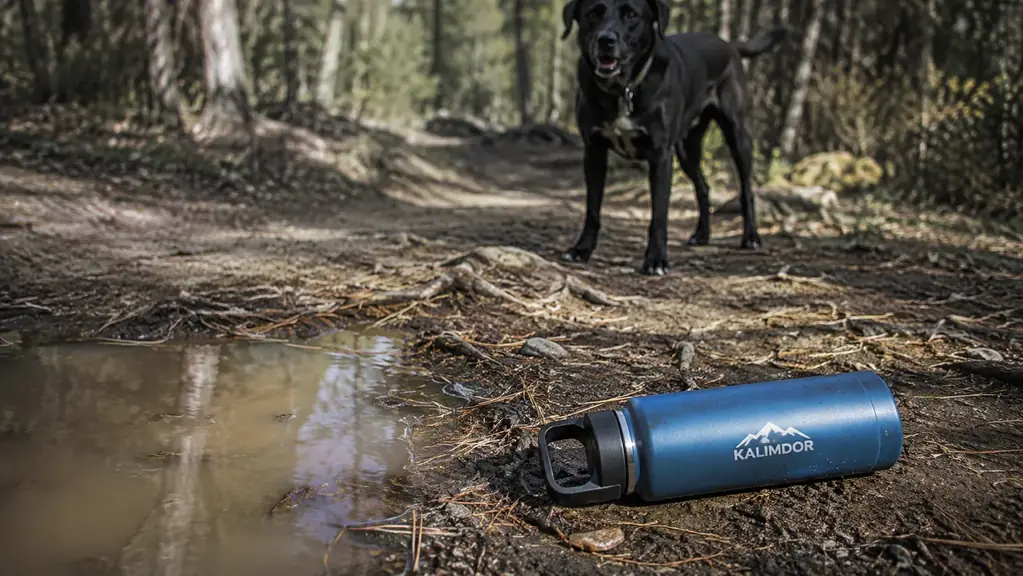
Every dog bottle on Amazon calls itself leak-proof, so that word stopped meaning anything to me years ago. It is printed on the same box as a dozen designs that ride in the bottom of a pack and come out soaked, and I have bought enough of them to stop trusting the label and start trusting the valve. That is where the Kalimdor dog water bottle earned its keep, and also where it nearly lost it. After a full season clipped to my pack, thrown in truck cabs, and dropped on gravel, I can tell you exactly which parts of this bottle stay dry and which ones are a quiet gamble.
I am Mark, I haul two dogs everywhere I go, and hydration gear gets more abuse in my truck than it does on most trails. Duke is the 84-pound black Lab, and Biscuit is the chocolate cross that comes on the milder trips. This is the honest rundown of the 19-ounce Kalimdor, the good, the leak, and the wear, the way I would tell it to a friend leaning on the tailgate, because the five-star reviews skip all of it. I bought this with my own money, nobody sent it to me, and nothing here is a cut-and-paste of the marketing copy.
The Quick Verdict
A genuinely leak-proof bottle for the price, with a valve that holds until it does not. The cap seal and the molded clip are the reasons to buy it. The trough wants a rinse, the capacity is a top-up for a big dog, and the valve is the part to watch as it ages, because it is a plastic mechanism doing real work.
Amazon Check Today's Price →The Bottle That Survives the Leak-Proof Sales Pitch
Most leak-proof bottles leak. After a season of jostling packs and a couple of gravel drops, the Kalimdor is one of the few that mostly backed up its claim. If you are tired of a wet pack and a puddle-drinking dog, check today's price on the 19-ounce and see for yourself.
Amazon Check Today's Price on Amazon →How I've Used It
I did not set out to test the Kalimdor. I bought it because Biscuit drank from a puddle once too often and I wanted a bottle that would not soak the inside of my pack on the way to the trailhead. So for a season I just carried it, the way a normal person carries it, and I only wrote down what actually went wrong. It rode in the mesh side pocket of my pack on rocky trails, wedged against a thermos in the truck, and hung from the molded clip on a belt loop at camp. In between, Duke knocked it out of a cupholder onto a gravel rest stop, and it took one scuff and no crack.
The point of this review is that I treated it like a tool instead of a lab sample. I did not baby the seal, I did not clean it after every trip, and on more than one hot afternoon I left it half full in a closed truck cab. That is how the ordinary owner, the one writing the five-star review, never runs the bottle, and it is how the honest failures surface. What failed in that time is the honest core of this review, and what did not fail is why I still pack it.
I keep a small log when a piece of gear matters to me, nothing fancy, just a line in a notebook with the date and what happened. My Kalimdor notes run to eleven entries, and most of them are dull in the best way: filled at the truck, no leaks on the drive, quick rinse at the creek. The interesting ones are the two I will get to, the lock-ring incident and the valve getting lazy. Dull notes are the sign of gear that works, and this bottle is mostly dull in a good way.
The Valve Is the Whole Argument, and It Wears
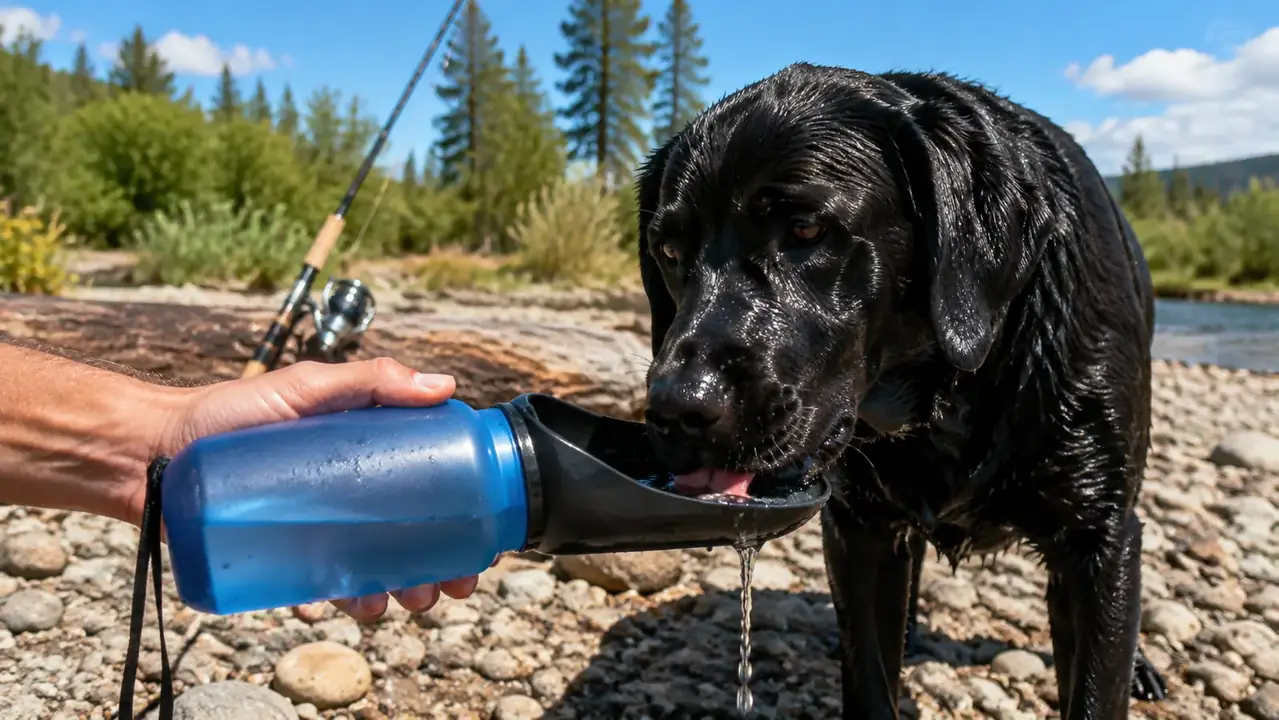
Lift the Kalimdor and squint at how it delivers water and you will see the truth of it: everything rides on one little plastic valve and a lock ring. Press the valve and water runs into the trough at the base, tip the bottle up and the seal closes. It is elegant when it is new, and it is exactly the kind of mechanism that either holds up for years or turns to a drip-by-drip annoyance, and the five-star crowd never tells you which one it is.
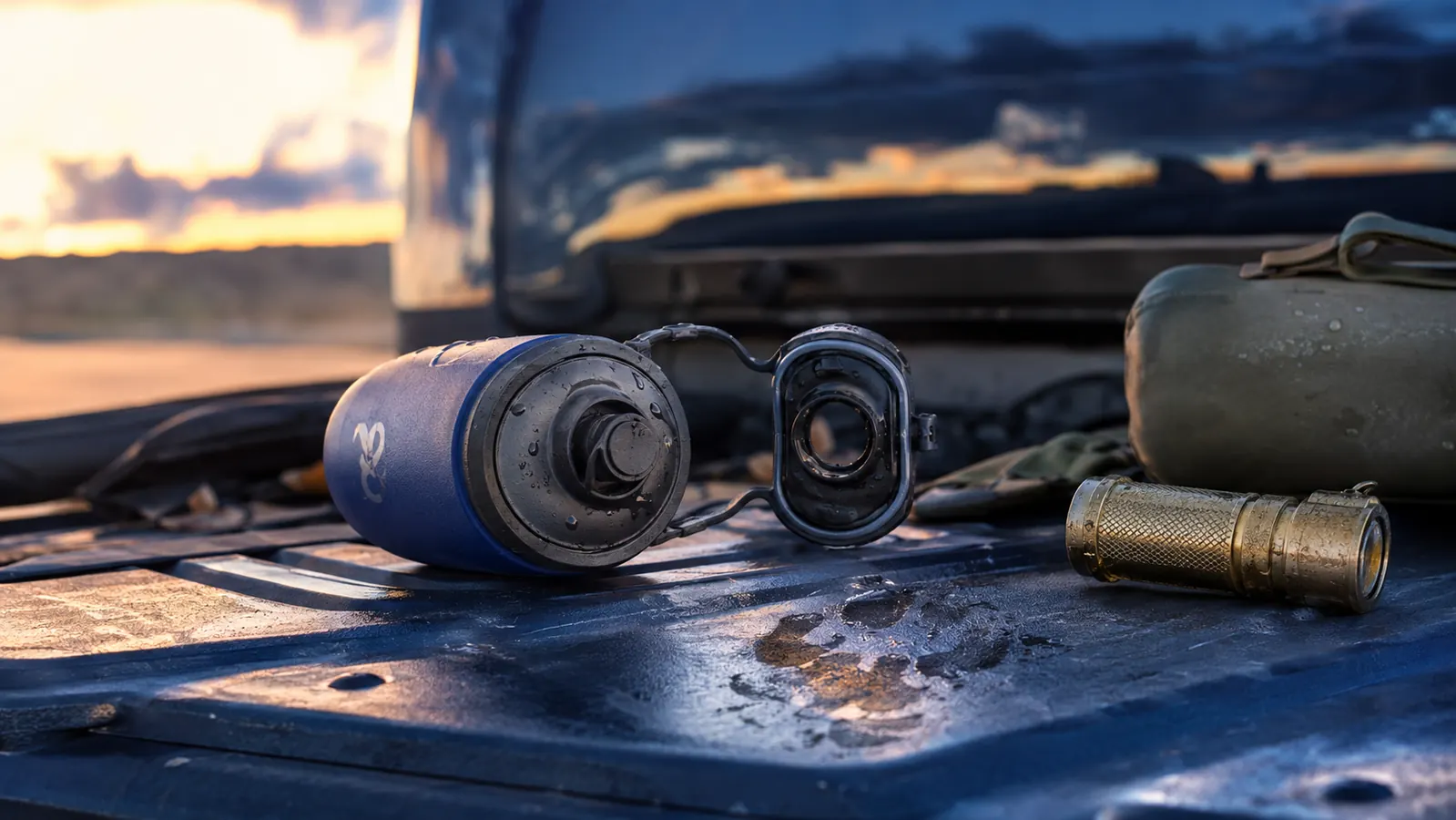
Here is the honest answer after a season. The lock ring is the part that separates this bottle from the cheap ones, because when you lock it, no amount of squeezing opens the valve, and that is what keeps a packed bottle dry. Six months in, that ring still clicks firmly and still seals tight, including after a lot of grit packed around it. The failure the reviews do not warn you about is slower: the valve pin itself. It is soft plastic, and over repeated presses with dirty hands, mine started to feel slightly less crisp, the kind of lazy snap you will not notice until the water does not stop the instant a dog finishes.
I put a drop of food-safe silicone on the moving parts twice over the season, which is thirty seconds of maintenance that would not occur to most buyers, and it kept the press clean. Skip that and the valve is the part I would expect to go first on a heavy-use bottle. It is replaceable only by buying a new bottle, so treat it gently and keep it clean, because it is a plastic mechanism doing real work every time your dog drinks. Grit is the enemy, and the valve is the part of this bottle that will tell you whether it was worth the money two years from now, not two weeks.
The Leak-Proof Claim Holds, With One Caveat
Now the claim everyone asks about. Locked and shut, the Kalimdor stayed dry through everything I threw at it: a rain-soaked pack, a hot shut truck cab with a half-full bottle, and a gravel bounce that scuffed the plastic. The cap o-ring still seals, and the design has no separate loose bowl to rattle and spring open, which is the reason most budget bottles leak. That piece is genuinely good and it is the reason this one earned its keep.
The caveat is the day I left the lock ring open and the bottle wedged sideways in the pack. That leaked, of course, because I had given it permission to. The five-star reviews will not tell you that the bottle is only leak-proof when you remember to lock it, and that the valve sits inches from where surprised or excited hands, or a dog's nose, can nudge it. It is not a flaw, it is a fact of the design, and it is the single most common way the bottle will ever leak on you. Lock it and it is dry. Forget it once and you will chalk a small puddle up to your own memory, like I did.
I want to be precise about the leak, because this is where reviews get loud and wrong in both directions. The sealed, locked bottle does not leak, full stop. I left it pinned under a rain jacket for six miles and my pack liner came home dry. But the lock ring is a habit, not a magnet, and the instant you treat the open position like logic instead of a choice, you get water where you did not plan it. That is true of every bottle with a user-controlled valve, and it is worth internalizing before you write a one-star review about a puddle you caused.
Locked and shut, the Kalimdor stayed dry through a rain-soaked pack, a hot closed truck cab, and a gravel bounce. The one time it leaked, I had left the lock ring open, and that was on me, not the bottle.
Which Dogs Turn the Spout Into a Sprinkler
Here is the thing no review can tell you, because it depends entirely on your dog. Biscuit drinks like a lady, a slow lapping that drains the trough clean with almost no waste, and for her the Kalimdor is perfect. Duke drinks like he is putting out a fire, and he slobbers half of it back over the edge. With a big, sloppy drinker, the trough overflow gets on your hand, your pants, and the trail, and it happened every single time. That is not a defect in the bottle, it is a mismatch, and it is the difference between hearing that this thing is great and hearing that it leaks like a sieve.
If your dog chomps at the water or drinks with its whole face, buy a size with a bigger, rimmed trough or plan on a wet sleeve. The Kalimdor's trough is modest, sized to a mid-size dog, and a large retriever leans over it and makes a mess. For Duke the 19 ounces is less a full drink than a top-up, a clean sip on the move, and I still carry a spare jug in the truck for his real sessions. Know your dog before you blame the bottle, because most of the one-star spill complaints are really about a dog this trough was never built for.
The Other Honest Limits
Capacity is the number to be honest about. Nineteen ounces sounds like plenty until you pour it into a trough next to an 84-pound Lab. For Biscuit it is a solid break, for Duke it is a mouthful, and on an all-day trip you will top up at every stream and trailhead. There is a reason bigger bottles cost more, and if you trail one big dog on long mileage, size up and plan the refills.
The water also goes warm, since nothing here is insulated. Dogs do not care as much as people do, but on a 90-degree afternoon the trail-exposed water is tepid by the second half. Start it cold or keep it in shade. And the trough wants a rinse after every dusty trip, because a dog drinks with its whole face and a dirty trough is a smell you will remember by week three. That is maintenance, not a defect, and I would say the same about any bowl you own.
There is also the simple truth that a bottle with a built-in bowl is not for everyone. The trough adds weight at the base, the whole thing is wider than a normal water bottle, and if you are a minimal backpacker counting grams you will feel the difference. None of that bothers me, because I am usually hauling a shotgun and a pack of dog food anyway, but it is an honest tradeoff for the people who want one bottle to do everything.
What I Compared It Against
I did not review the Kalimdor in a bubble. This season I ran the two other common ways to give a dog water so the Kalimdor would have to earn its place. The collapsible bowl is the old standby and it still lives in my truck. It holds more water, but it is a stop-and-dig chore every time, it flops over the moment you set it down on uneven ground, and by week two of a season it smells like whatever puddle it last sat in. Against that, the Kalimdor's trough, held in one hand, is a real upgrade.
I also ran the Cibaabo bottle side by side, the other one you see clipped to packs at every trailhead. That comparison deserves its own full write-up, and I gave it one, but the short version is that the Kalimdor won for my use on two things: the valve was steadier as the season wore on, and the molded clip rode a pack strap without working loose. For a sloppy big dog, the Cibaabo's bigger trough was actually nicer for Duke. Tradeoffs in both directions, which is why the honest answer is always know your dog.
What I Liked
- Locked and shut, it stayed dry through rain, closed truck-cab heat, and a gravel drop; the cap o-ring and lock ring earn their keep
- One hand works the valve and trough, which matters on a leash, a climb, or a restless dog
- The molded clip rides on a pack strap or belt loop and has held at a dead run
- No loose bowl to lose and no lid that pops off at the bottom of a pack
- More than 8,200 reviews at 4.5 stars, and the dry-seal half of that matches what I saw
Where It Falls Short
- The valve pin is soft plastic and the part most likely to wear first on heavy use
- The bottle is only leak-proof when you remember to lock the ring, which is the common way it leaks
- 19 ounces is a top-up, not a full day, for a large or heavy-drinking dog
- The modest trough spills on big, sloppy drinkers, which reads as a leak to some owners
- No insulation, so the water goes tepid on a hot afternoon
Who This Is For
Buy this bottle if you trail a mid-size dog, if you want clean water without the stop-dig-pour-bowl chore, and if you will remember to lock the ring and rinse the trough. It fits a dog that drinks neatly, short to moderate trips, and anyone who carries a pack anyway and wants a bottle that rides on a strap instead of in a hand. For that owner, after a season, it is the bottle I would start with. My guide to keeping a dog hydrated on the trail covers the capacity math that makes it work.
It is also a good second bottle for the truck or the glovebox, the one that lives near the tailgate for errands, vet runs, and the feed store. That is a use the reviews do not talk about, but it is real: a clean bottle of water for a panting dog on a hot errand run is a small thing that makes a hot afternoon better for everyone. If that is your use case more than long trails, the modest 19 ounces stops mattering quite so much.
Who Should Skip It
Skip it if your dog is a big, sloppy drinker, because you will spend the day with a wet sleeve and the modest trough fighting you, and a larger, rimmed design will serve you better. Skip it if the dog drinks a liter every time the pack comes out, since you will be refilling constantly. And honestly skip it if you will not do the thirty seconds of valve maintenance or the trough rinse, because this is a little mechanism and it answers to how you treat it.
For everyone else, that is the honest ledger. The Kalimdor is not perfect and I would not pretend it is: the valve is the watch-me part, the lock ring decides whether it leaks, the capacity is a short leash on a long day, and a sloppy dog makes a mess. What it is, is a genuinely leak-proof bottle for the money, the one that stayed dry in my pack all season and gave both dogs clean water on the move. When the alternative is a muddy puddle, that is the whole job, and it does it.
A Dry Pack and Clean Water Are Worth the Valves
A season of jostling packs and gravel drops later, the Kalimdor is the bottle I trust not to soak the inside of my bag. If you are done watching your dog gamble on puddles, check today's price on the 19-ounce. And if you are weighing it against the Cibaabo, my side-by-side comparison lays out which stays drier longer.
Amazon Check Today's Price on Amazon →