
You are probably here because you saw the 112,000 ratings and figured the Midwest iCrate is the safe call. It mostly is. But the five-star crowd writes from a clean living room with a puppy nobody has to haul yet. My iCrate has spent a season in the back of a pickup with a 68 pound wirehaired pointer named Bo, and real use has taught me things the star rating does not cover: where the assembly quietly goes wrong, why the stated 71 to 90 pound range lies to you on fit, and how the single door decides where the crate is allowed to live. That is what this review is for.
I will give you the short version first, neighbor over the fence style. The Midwest iCrate is a good crate. I own one, it gets used every week, and I would buy it again at today's price. But the details that never make it into a five-star comment are the exact details that decide whether this crate works for you or pushes you toward the double door version or a hard kennel. Read past the rating for those.
A word on who is talking to you, so you can calibrate it. I am not a crate salesman and I did not borrow a dog for the photos. I am a guy who hunts with two dogs, camps with them, and needs a crate that survives the back of a truck, wet weather, and a dog who would rather be working than resting. If that is your world too, keep reading.
The Quick Verdict
A solid folding wire crate that earns its star rating if you measure the dog instead of trusting the box, and buy the door configuration your truck bed and camp setup actually allow.
Amazon Check Today's Price →The 42-Inch Single Door That Hauls, Dries, and Folds
Bo's crate has now survived two deer seasons and a summer of campouts, and the only change I would make is measuring the dog before ordering. See today's price on the 42-inch single door before you trust a number printed on the box.
Amazon Check Today's Price on Amazon →How I've Used It
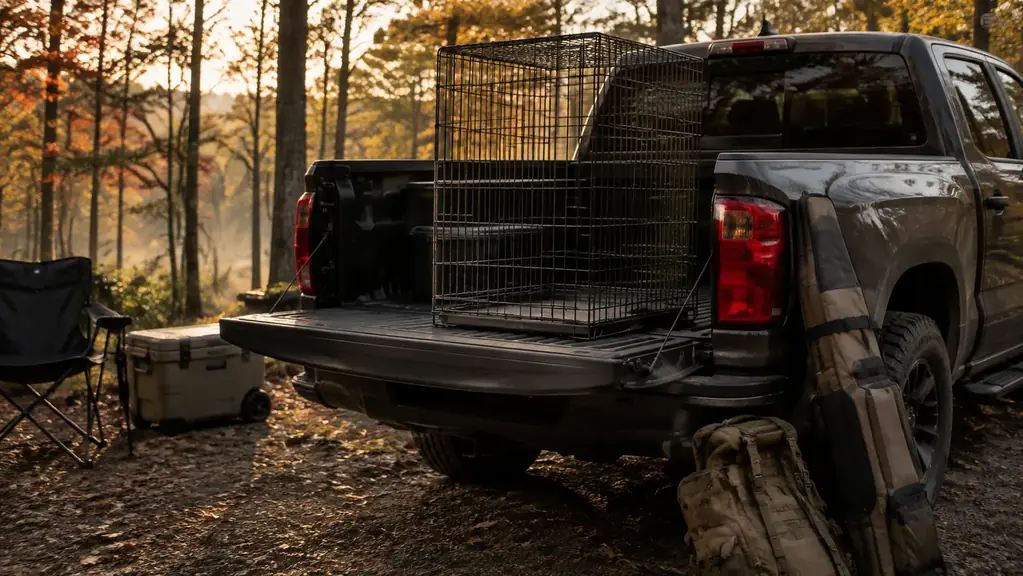
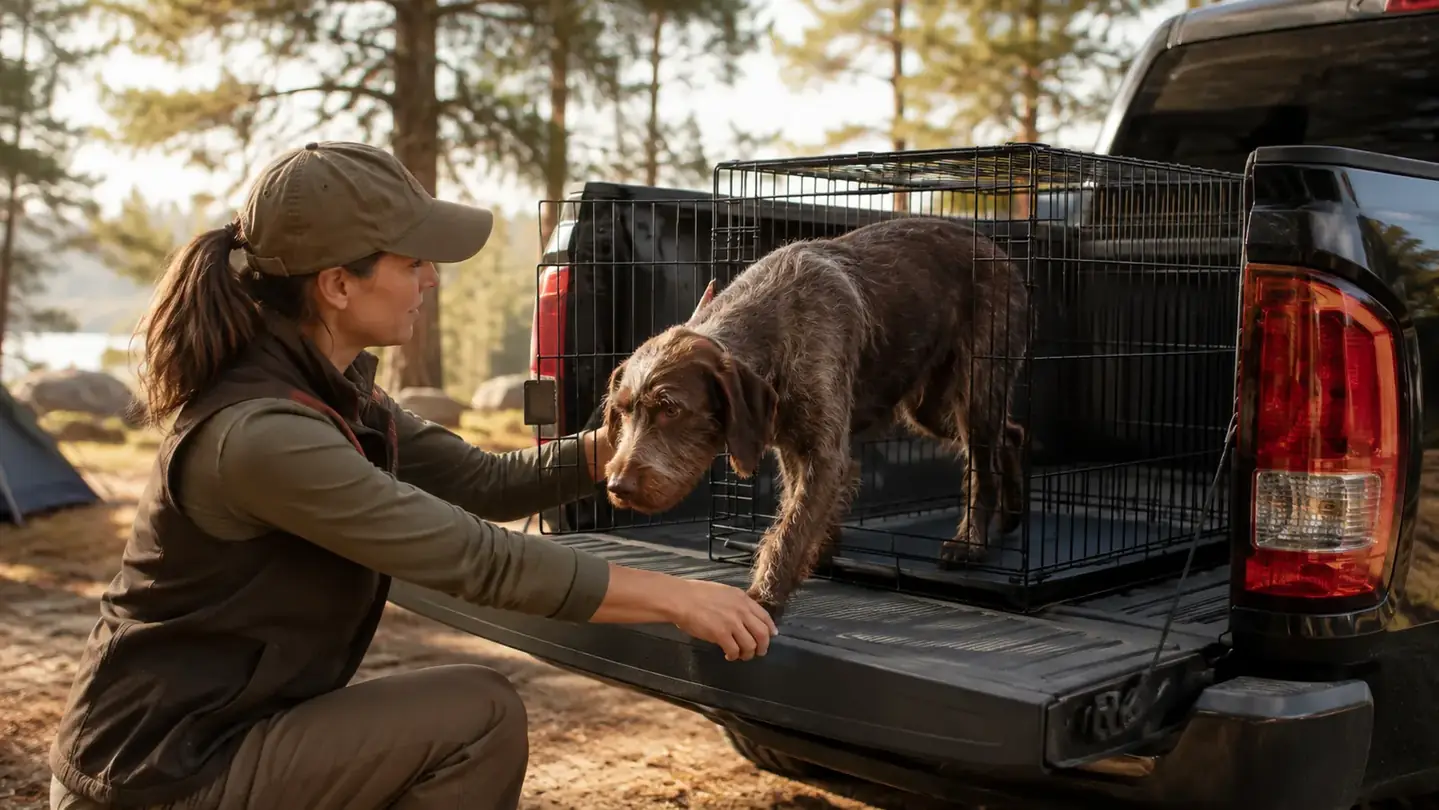
The dog under test is Bo, a 68 pound German wirehaired pointer, deep chested and long legged, exactly the shape the 42-inch is aimed at. He rides in the bed of my F-150 under a camper shell, crate strapped against the forward bulkhead with the single door facing the tailgate. He has slept in it at camp on the plastic pan with a folded horse blanket under him, ridden in it for three hour drives to public land, and paced it for two hours waiting on first light of rifle season. Between trips it folds flat and leans behind the seat or against the shop wall.
I also ran a week of guest duty during elk camp last September, when my buddy's 80 pound Lab, Duke, got the crate for the week. That gave me a second, heavier dog to measure against Bo and a fast education in what the weight range on the box does and does not mean. Rain and mud are the constant test here. A wire crate is a drying rack, which is half the reason a hunter wants one, and the plastic pan takes the whole wet season sitting right in it.
Cleaning is the boring, honest part of ownership. The pan pulls out and hoses clean in two minutes, but it is shallow, it flexes under a big dog standing up, and in hard cold the plastic goes stiff. Cold weather is where a cheap pan becomes a cracked pan. I have cracked one, replaced it for a few dollars, and moved on. I would rather you know that up front than discover it in a January driveway.
Where the Assembly Quietly Goes Wrong
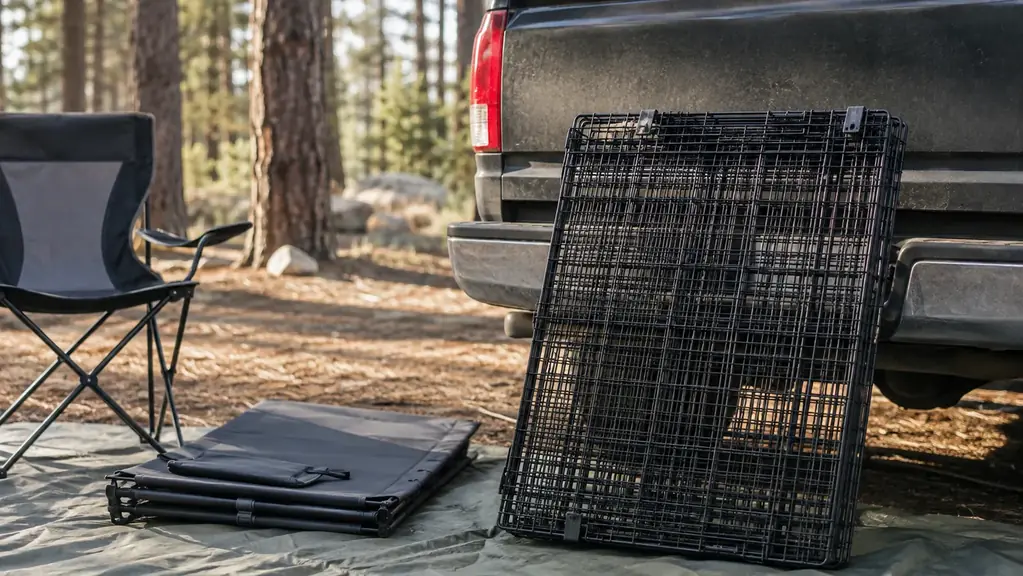
The crate ships flat with the top and bottom panels stacked and a small bag of corner clips. Watch one video and it unfolds in ten minutes. What the videos skip is that every corner clip has to seat with a definite click, and the bottom crossbar has to drop into its catches on all four sides, or the frame sits twisted by half an inch. A twisted frame is the single most common source of the 'the door keeps popping loose' complaints in those 112,000 reviews, and the fix is not a new crate, it is reseating the clips. Two of my clips lose their bite after constant fold and unfold cycles, so I push them home with the handle of a screwdriver before every trip.
The other assembly note is the divider panel that ships in the box for young puppies. It is a real freebie and I passed mine to a neighbor who was crate training a Lab pup. Just do not use it as a long term barrier for a grown dog. There is a gap under the crossbar that a determined animal can wedge under, and I have watched Bo poke his head under it like a chicken under a gate.
The 71 to 90 Pound Label Is a Suggestion, Not a Fit
The box says the 42-inch suits large breeds from 71 to 90 pounds. The scale says Bo is 68 pounds. He does not fit like a 68 pound dog, because the label is about weight and the crate is about length. The honest way to size any wire crate: measure from the nose to the base of the tail, add four inches for turning room, then check width across the shoulders. A long backed 77 pound hound can genuinely need the 42 while a stocky 85 pound dog in the same weight class swims in it. I measured Duke before elk camp at 35 inches nose to tail base, so the 42 was technically right and still snug, and he had to curl to turn around. A 48 would have been kinder.
The corollary is the one that costs people real money: the label is the maximum the crate is rated to hold, not a fit guide for your dog. A 60 pound puppy bought into the 36 will outgrow it inside a year and you will buy twice. Measure to adult size using the parents if you have a puppy, then buy to the adult. That one habit would retire half of the should I size up threads in the Amazon comments.
The weight label on the box is the least useful number for sizing this crate. Measure nose to base of tail, add four inches, and buy to that.
The Single Door Decides Where the Crate Lives
The single door is the entry price configuration, and it is what most of those 112,000 reviews bought. The catch nobody puts in a review: one door means the crate has exactly one good side, and the whole setup depends on which way that door faces. In my truck the door points at the tailgate so Bo can see out and step in from the side. The same crate at camp, backed against a tent or a cooler, can only be entered from the one side facing open ground, so every new camp setup means repositioning an 11 pound crate after a long day. It is a small thing that gets old.
This is the honest moment to talk about the double door version, which is not just an upsell. If the crate will live against a truck bulkhead, a wall, or a tent, a second door on the short end turns the whole crate around without you moving it. I have not switched because my single door faces the right way in my truck, and I would not pay the difference for a crate that sits in the middle of a room. But map where the crate will sit before you order, because the door that does not exist is the one you cannot argue with.
One more thing your truck decides for you. The 42-inch is a hair over three feet long, close to two feet tall and wide, and a long-side door wants a foot of open space just to swing. In my short bed that meant the crate had to sit low under the camper shell, which cost me bed space I did not plan to lose. If you are measuring the bed before you buy, add a foot of door swing to the crate length.
If this is your first wire crate and you want the big picture, I wrote a full 18 month rundown of this same crate, and a separate list of ten reasons a folding wire crate earns its spot in the truck before the dogs do. Both assume you already chose wire; this review is about the exact crate in front of you.
The Pan, the Latches, and the Cold Weather Reality
Three small things a month of living room use will not teach you. First, the pan. It is thin, it flexes, and below freezing the plastic gets stiff enough that a heavy dog landing hard on a corner has cracked it. The pan is sold separately and cheap, so a crack is an annoyance and not a tragedy, but it is real. Second, the door latch is a spring loaded slide, and a bored or determined dog can learn to bump it. Bo has not figured it out, but I watched Duke nose right through it in the second week, which is why the latch only counts as secure when the crate is strapped in the truck. At camp, where the crate doubles as a high sided pen, I run a carabiner through the latch loop.
Third, plan wind and water around it. The open wire that dries a wet dog is the same open wire that saves him from nothing, no wind break, no spray off a passing truck, no rain off the camper shell. In winter I hang a horse blanket over the back half and set the pan on a scrap of stall mat so the plastic is not sitting on frozen metal. Bedding and wind breaks have to match the season you actually hunt in, not the ones in the product photos.
The Alternatives I Measured Before Buying
I nearly bought a hard sided kennel instead, and I still own one for a different job. Solid plastic keeps a dog out of the wind and contains a panicking dog in a way wire cannot, and it is the honest choice if crash protection matters to you at all. What it does not do is fold flat, dry out a wet dog, or come apart in forty seconds when you need the bed for gear. Mine lives in the shop and comes out for cold, windy overnights. The iCrate lives in the truck.
A soft sided travel crate never made the final list. It packs small and works fine for a quiet couch dog on a hotel trip, but a 68 pound wirehair in the back of a pickup will unzip it from the inside or flatten it in a hard stop. If your dog rides in weather and dirt, skip soft sided entirely.
The double door variant of this same iCrate is the one honest upgrade path. I measured both, and the price difference buys exactly one thing, a second door on the short end. For a crate that sits in the middle of a room, skip it. For a crate that lives against a bulkhead or a tent wall, the second door turns the whole crate around without moving it. I stayed with the single door because mine points the right way, and I would rather spend the difference on bedding than on a door I would open once a month.
What I Liked
- Folds flat in seconds for storage behind the seat or against a wall
- Open wire dries a wet hunting dog fast, which is the whole job at camp
- Plastic catch pan pulls out and hoses clean after muddy weekends
- Divider panel included turns it into a puppy crate for free
- Square welds and a door that still latches clean after a full season
Where It Falls Short
- Stated 71 to 90 pound range is a weight rating, not a fit guide; length matters more
- Single door only opens on one side, so placement in a truck bed or against a wall decides everything
- Thin plastic pan flexes under big dogs and can crack in hard cold
- Not crash rated: in a truck bed it manages a dog, it does not protect him
- Spring loaded latch is simple enough for a determined dog to learn
Who This Is For
Buy the Midwest 42-inch single door if you haul a large sporting, hound, or herding dog on a regular schedule, if you need the crate to disappear flat when it is not in the truck, and if you want something that hoses clean after a mud-caked weekend. For camp and truck duty it is hard to beat, because the whole job of being around wet dogs is air and rinse, and this crate does both. If your dog is a normally proportioned large dog rather than a giant breed, this stays the easy recommendation.
If you are torn between this and a cheaper no-name wire crate, the difference shows up in the welds and the door fit over a season. I have owned both. The cheap one wobbles at the door and drops its latch tension inside a few months. The Midwest is not perfect, this review has said exactly why, but after a full season it still folds square and latches clean.
Who Should Skip It
Skip it if you expect crash protection. No folding wire crate is a substitute for a hard sided kennel in a collision, and I will not pretend otherwise. Skip it if you own a confirmed escape artist or a chewer who targets wire and plastic, because the pan and the latch become projects. Skip it if you need to reach a dog from both sides at camp, where the double door is the honest answer. And if the crate will mostly sit in a corner of the house, a solid sided or furniture style crate is a better use of the money.
Crate Sized to Your Dog, Not the Label
After a full season I would buy the Midwest again, sized off a tape measure instead of a box, with the door facing the place I actually need it. Check today's price before someone else picks your dog's size for you.
Amazon Check Today's Price on Amazon →